




.jpg "JBL 520BT Wireless on-ear Headphones")
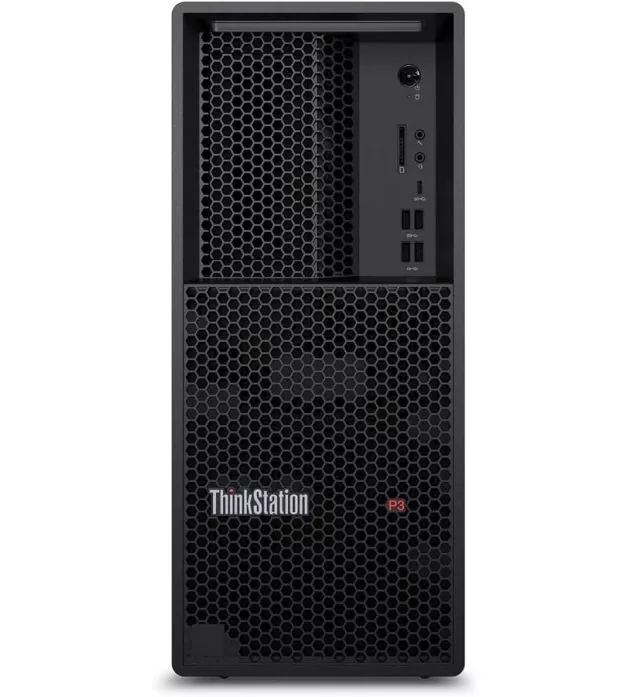
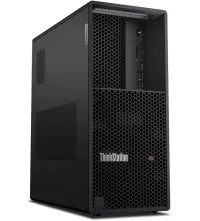


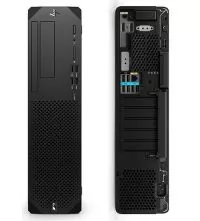
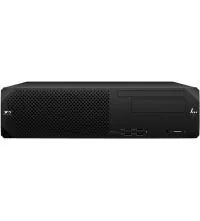
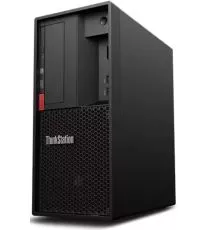
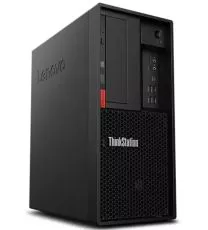
The Lenovo ThinkStation P3 Tower G2 is built for advanced professional environments that demand constant speed and reliability. The Intel Core Ultra 9 285 vPro processor delivers strong multitasking and stable performance for engineering, architecture, analytics, simulation, and complex office workflows.
Intel Core Ultra 9 285 vPro (Series 2, LGA 1851)
Architecture: Lunar Lake / Core Ultra Series 2
Cores / Threads: 24 cores / 24 threads
CPU types: Performance cores + Efficiency cores
Max turbo frequency: ~5.7 GHz (varies by workload)
Base power (PBP): 125 W
Maximum turbo power: Typically 180–200 W (varies by system)
Integrated GPU: Intel Arc-class GPU
AI Acceleration: Intel NPU + GPU compute
Memory Support: DDR5 up to chipset-rated speeds
vPro Enterprise supported
Intel Hyper-Threading
Intel Deep Learning Boost
Intel Thread Director
Intel TME / SGX / security extensions
Support for PCIe Gen 5 lanes for GPU + Gen 4 lanes for storage
Intel W880 Workstation Chipset
Platform: Workstation-grade, supports ECC and non-ECC DDR5
Memory channels: 2 channels
DIMMs per channel: 2 (total 4)
PCIe lanes:
From CPU: PCIe Gen 5 x16 for GPU, PCIe Gen 4 for M.2
From chipset: PCIe Gen 3/4 lanes for I/O, M.2 adaptors, onboard controllers
RAID controller: built-in
Enterprise manageability: AMT, vPro
Security: TPM 2.0, BIOS Guard, Boot Guard
Installed: 128 GB DDR5-4400MT/s
Type: DDR5 UDIMM
Speed: 4400 MT/s (actual speed may adjust based on 4-DIMM load)
Configuration: likely 4 × 32 GB or 2 × 64 GB depending on vendor
Supported ECC: Platform supports ECC, but depends on the DIMMs installed
Max supported: 256 GB total
DDR5 on W880 typically runs at lower voltage (1.1–1.25V)
On a fully populated system, max effective speed is often limited by CPU IMC
Supports on-DIMM Power Management IC (PMIC)
Installed: 1 × 2 TB NVMe M.2 SSD
Type: PCIe NVMe M.2
Likely interface: PCIe Gen 4 ×4 (fastest supported for most M.2 slots)
Form factor: M.2 2280
Bootable: Yes
Sequential performance: typically 3.5–7.4 GB/s
M.2 slots: 3–4 total (mix of PCIe Gen 5 / Gen 4)
SATA support:
Up to 2 × 2.5" SATA SSD
Up to 2 × 3.5" SATA HDD
Total storage potential: well over 20 TB
NVMe RAID: 0 / 1 / 5
SATA RAID: 0 / 1 / 5 / 10
(All chipset-level, no separate card needed.)
NVIDIA RTX 4000 Ada Generation (20 GB GDDR6)
Architecture: Ada Lovelace
CUDA cores: 6,144
Tensor cores: 192 (4th-gen)
RT cores: 48 (3rd-gen)
VRAM: 20 GB GDDR6 ECC
Memory bus: 160-bit
Memory bandwidth: ~360 GB/s
TDP: ~130 W
Interface: PCIe Gen 4 ×16
Max resolution: 8K × 4K multi-display setups
Display outputs (typical):
4× DisplayPort 1.4a (up to 4 monitors)
Excellent for: CAD, BIM, 3D modeling, rendering, simulation, AI workloads, large multi-display setups
Faster than RTX A2000 / A1000, below RTX 5000 Ada
Installed PSU: Depends on the build; RTX 4000 Ada typically pairs with 750 W Platinum
PSU Options Supported:
500 W Platinum
750 W Platinum
1100 W Platinum
80 PLUS Rating: Platinum
Cooling: Multi-zone workstation cooling, front-to-back airflow
PCI Express
1 × PCIe 5.0 x16 slot (GPU primary)
1 × PCIe 4.0 x16 slot (electrical x4)
2 × PCIe 3.0 x1 slots
USB internal headers
SATA connectors
Front-panel connectors
TPM (integrated), no add-on needed
Front I/O
USB-C 20 Gbps
USB-A ports (5 Gbps and/or 10 Gbps)
Headphone/microphone combo
Dedicated microphone jack
Gigabit Ethernet RJ-45
USB-A (multiple 5 Gbps and USB 2.0)
Display output ports (HDMI/DP from integrated GPU unless disabled by discrete GPU)
Audio line-out
LAN: Intel I219-LM Gigabit Ethernet
Optional WLAN: Wi-Fi 6E or Wi-Fi 7 card
Bluetooth: up to 5.4 (with Wi-Fi add-on)